Agri Expo Chhattisgarh: Why Every Farmer and Agri Business Should Attend

Introduction Chhattisgarh is one of India’s fastest-growing agricultural states, known as the Rice Bowl of India. With millions of farmers, expanding irrigation projects, and increasing adoption of modern farming practices, the state has tremendous potential for agricultural growth. As agriculture continues to evolve, farmers need access to the latest machinery, high-quality seeds, irrigation technologies, government schemes, and expert knowledge. An Agri Expo in Chhattisgarh provides the ideal platform where farmers, agribusinesses, agricultural universities, government departments, and technology providers come together to share ideas and explore new opportunities. Eco Farm Fair aims to become one of Central India’s leading agriculture exhibitions by connecting innovation with farming and creating opportunities for everyone in the agricultural ecosystem. Why Attend an Agri Expo in Chhattisgarh? Why Eco Farm Fair? Eco Farm Fair is designed to bring together the complete agricultural value chain—from farmers and agri-startups to machinery manufacturers, research institutions, and policymakers. Whether you’re a farmer looking to improve productivity or a company looking to expand in Central India, Eco Farm Fair offers a valuable platform for learning, networking, and business growth. Conclusion Agriculture is changing rapidly, and staying informed is the key to success. By attending an Agri Expo in Chhattisgarh, farmers and businesses can discover new technologies, gain expert knowledge, and build connections that support long-term growth. Eco Farm Fair is committed to creating a platform that empowers farmers and strengthens the agricultural ecosystem of Chhattisgarh. Join us and be part of the future of Indian agriculture.
Why Chhattisgarh Needs a World-Class Agriculture Expo
Introduction Chhattisgarh is widely known as the Rice Bowl of India, with agriculture serving as the backbone of its economy. Millions of farmers depend on agriculture for their livelihood, and the state has immense potential in crop production, horticulture, dairy, fisheries, and agri-processing. However, while agriculture is evolving rapidly across the world, many farmers still have limited access to the latest technologies, modern machinery, innovative farming techniques, and direct interaction with leading agricultural companies. This is why Chhattisgarh needs a world-class agriculture expo—a platform that connects farmers with innovation, knowledge, and business opportunities. Modern farming is driven by technology. Agricultural exhibitions introduce farmers to advanced tractors, precision farming equipment, irrigation systems, drones, soil testing solutions, and digital farming tools. These innovations help farmers improve productivity while reducing costs. Many farmers do not have the opportunity to compare products from multiple companies in one place. An agriculture expo allows leading manufacturers of farm machinery, seeds, fertilizers, irrigation systems, and agri-tech solutions to directly interact with farmers and demonstrate their latest products. Climate change, water scarcity, and soil degradation are major concerns. An agriculture exhibition can educate farmers about organic farming, natural farming, water conservation, climate-smart agriculture, and renewable energy solutions that support long-term sustainability. Agriculture expos provide a common platform where government departments can create awareness about farmer welfare programs, subsidies, crop insurance, irrigation projects, and skill development initiatives. This improves outreach and encourages greater participation. Young people are bringing innovation into agriculture through drones, artificial intelligence, food processing, agri-startups, and digital platforms. A dedicated agriculture expo inspires students, entrepreneurs, and progressive farmers to explore new opportunities in the agricultural sector. Agriculture exhibitions connect farmers with manufacturers, dealers, distributors, exporters, processors, banks, financial institutions, and agri-tech startups. These interactions create new business partnerships that strengthen the agricultural ecosystem. A large-scale agriculture exhibition attracts investment, promotes local businesses, showcases regional agricultural products, and encourages technology adoption. This contributes to employment generation and rural economic development across the state. Why Eco Farm Fair? Eco Farm Fair aims to become Central India’s leading agriculture exhibition, bringing together farmers, agricultural universities, government departments, agri-tech innovators, machinery manufacturers, seed companies, irrigation experts, and agribusinesses. The objective is simple—to create a platform where knowledge, innovation, and business come together for the benefit of Indian agriculture. Conclusion Chhattisgarh has the resources, the farming community, and the potential to become a leader in modern agriculture. A world-class agriculture expo can accelerate this growth by connecting farmers with technology, education, investment, and market opportunities. Eco Farm Fair is committed to supporting this vision by creating a platform that empowers farmers, promotes innovation, and contributes to the future of agriculture in Chhattisgarh. Together, we can build a stronger, smarter, and more sustainable agricultural ecosystem.
Why Agriculture Exhibitions Are Essential for the Future of Farming
Introduction Agriculture is evolving rapidly with the introduction of advanced machinery, smart farming technologies, improved seeds, efficient irrigation systems, and sustainable cultivation practices. For farmers, agribusinesses, and agricultural entrepreneurs, staying updated with these developments is essential to remain competitive. One of the best ways to discover these innovations is by attending an agriculture exhibition. These events bring together farmers, manufacturers, researchers, startups, government departments, and industry experts on a single platform. Agriculture exhibitions are no longer just product showcases—they have become knowledge hubs that help shape the future of farming. What is an agriculture exhibition? An agriculture exhibition is a platform where leading agricultural companies, machinery manufacturers, seed producers, irrigation experts, financial institutions, and government organizations showcase their latest products, technologies, and services. Visitors get an opportunity to compare products, attend educational sessions, interact with experts, and discover practical solutions for modern farming. Discover the Latest Agricultural Technologies Agriculture exhibitions introduce visitors to innovative solutions such as the following: These technologies help improve productivity while reducing operational costs. Meet Industry Experts Visitors can directly interact with agricultural scientists, successful farmers, machinery manufacturers, irrigation specialists, seed companies, and financial institutions. Expert guidance helps farmers make better decisions for their farms and businesses. Explore Government Schemes Many agriculture exhibitions feature government departments that provide information on subsidies, crop insurance, farm machinery assistance, irrigation support, and various agricultural development programs. Understanding these schemes helps farmers maximize available opportunities. Compare Products Before Investing Purchasing farm machinery or agricultural inputs is a significant investment. Agriculture exhibitions allow farmers to compare different brands, evaluate quality, ask technical questions, and choose products that best suit their farming requirements. Build Business Connections Agriculture exhibitions create opportunities for networking between farmers, dealers, distributors, exporters, food processing companies, startups, and agribusinesses. Many long-term business partnerships begin at trade exhibitions. Learn Sustainable Farming Practices Modern exhibitions also focus on sustainable agriculture through the following: These practices help farmers improve profitability while protecting natural resources. Why Eco Farm Fair? Eco Farm Fair is Central India’s leading agriculture exhibition dedicated to innovation, education, and business growth. The exhibition brings together progressive farmers, agri-tech companies, machinery manufacturers, seed producers, irrigation experts, dairy businesses, government organizations, and agricultural institutions to create one powerful platform for learning and networking. Whether you’re a farmer looking to increase productivity or a company seeking to expand your market, Eco Farm Fair offers valuable opportunities for growth. Conclusion Agriculture exhibitions play an important role in transforming farming by connecting knowledge with innovation. By attending an agriculture exhibition, farmers gain access to new technologies, expert advice, better products, government information, and valuable business connections that contribute to long-term agricultural success. Join Eco Farm Fair and experience how modern agriculture is shaping a better future for farmers across India
From Traditional Farming to Smart Farming: The Future of Indian Agriculture
Introduction Indian agriculture has come a long way over the past few decades. Farmers who once depended entirely on traditional methods are now adopting modern technologies that improve productivity, reduce costs, and increase profitability. Smart farming is no longer limited to large farms. Today, farmers of all sizes can use technology to make better decisions, conserve resources, and produce higher-quality crops. The future of Indian agriculture lies in combining traditional farming wisdom with modern innovation. What is Smart Farming? Smart farming uses technology to improve agricultural practices. It includes the use of sensors, GPS, mobile applications, drones, weather forecasting, artificial intelligence, automated irrigation, and modern farm machinery. The objective is simple—produce more while using fewer resources. Better Decisions Through Data Today’s farmers have access to weather forecasts, market prices, soil reports, and crop advisory services directly on their smartphones. This information helps them decide the best time to sow, irrigate, fertilize, and harvest their crops. Technology Saves Time and Labour Labor shortages have become a major challenge in agriculture. Modern tractors, seed drills, transplanters, harvesters, and agricultural drones reduce manual work and help farmers complete operations faster and more efficiently. Water Conservation is the future. With water becoming increasingly scarce, efficient irrigation methods are essential. Drip irrigation, sprinkler systems, and automated irrigation controllers help farmers reduce water consumption while improving crop growth. Healthy Soil Means Better Crops Modern farming is not only about machines. Regular soil testing, balanced fertilizer application, crop rotation, composting, and organic matter management help maintain long-term soil fertility. Healthy soil produces healthier crops and better yields. Sustainable Agriculture for Future Generations Smart farming also focuses on protecting the environment. Renewable energy, organic farming, biological pest management, and responsible use of natural resources help create a more sustainable agricultural system. New Opportunities for Farmers Technology has opened new opportunities in food processing, direct marketing, precision agriculture, dairy farming, greenhouse cultivation, and value-added products. Farmers who continue learning can diversify their income and build stronger businesses. Experience Smart Farming at Eco Farm Fair Eco Farm Fair brings together leading agricultural companies, research institutions, startups, machinery manufacturers, irrigation experts, seed companies, and government organizations. Visitors can explore the latest innovations, interact with experts, attend educational sessions, and discover practical solutions that can be implemented on their own farms. Conclusion The future belongs to farmers who continue learning, adapting, and embracing innovation. Traditional farming knowledge will always remain valuable, but combining it with modern technology creates stronger, more profitable, and more sustainable agriculture. Eco Farm Fair is committed to helping farmers explore the future of farming through knowledge, innovation, and meaningful industry connections. Join Eco Farm Fair and take the next step toward smarter agriculture
7 Reasons Why Every Farmer Should Attend an Agriculture Exhibition Before Buying Farm Equipment
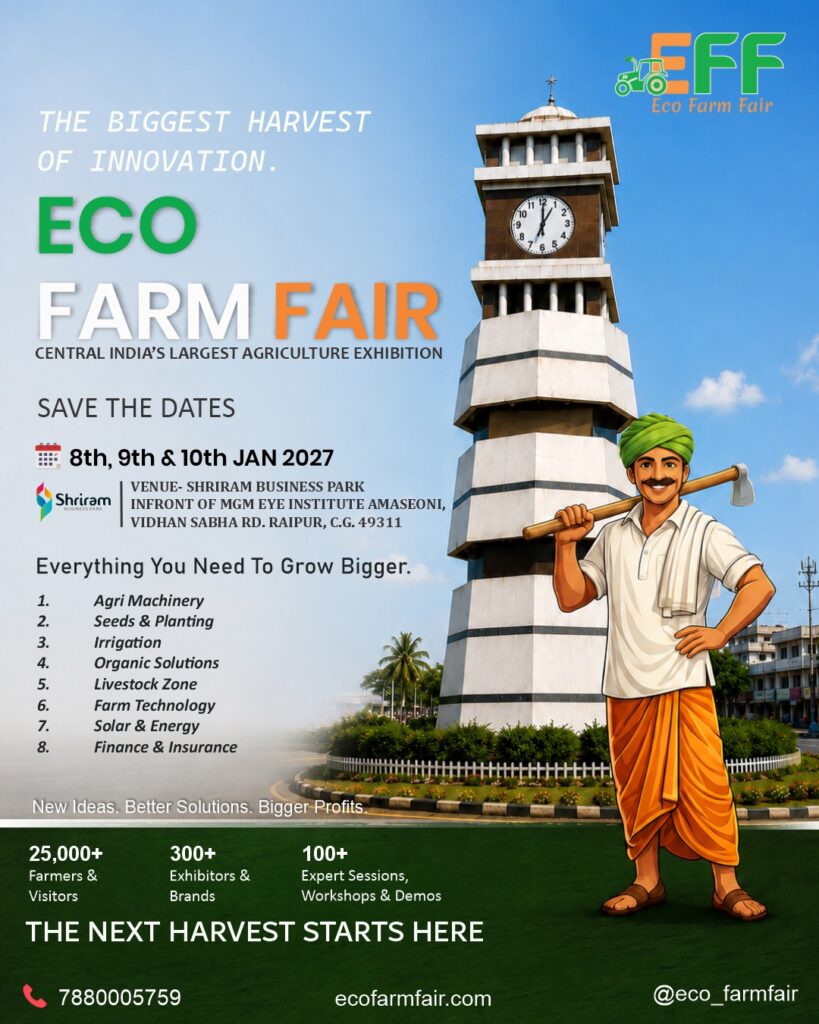
Introduction Buying farm machinery is one of the biggest investments a farmer makes. Whether it’s a tractor, rotavator, seed drill, drone, sprinkler system, or power tiller, choosing the right equipment directly affects productivity and profitability. Many farmers rely only on brochures, advertisements, or dealer recommendations. However, visiting an agriculture exhibition allows farmers to compare products, speak directly with manufacturers, and make confident buying decisions. Here are seven reasons why every farmer should visit an agriculture exhibition before investing in farm equipment. An agriculture exhibition brings together leading manufacturers from across India. Instead of travelling to different dealerships, farmers can compare machinery, features, prices, and technologies under one roof. This helps save both time and money. Seeing a machine in action provides much better understanding than reading a brochure. At exhibitions, companies demonstrate tractors, harvesters, seeders, irrigation systems, drones, and other equipment, allowing farmers to understand how each product performs in real farming conditions. Agricultural engineers, product specialists, and company representatives are available to answer questions and recommend machinery based on farm size, crop type, and budget. This helps farmers choose equipment that matches their actual needs. Many agricultural exhibitions provide information about government subsidy schemes, financing options, and bank loans available for purchasing farm machinery. Understanding these opportunities can significantly reduce investment costs. Modern farming is evolving rapidly. Farmers can explore GPS-enabled tractors, AI-powered crop monitoring, precision farming tools, solar-powered irrigation systems, and agricultural drones that improve efficiency and reduce costs. Agriculture exhibitions are excellent networking platforms where farmers can meet equipment manufacturers, agri-input companies, researchers, government officials, startups, and fellow progressive farmers. These connections often lead to better opportunities and continuous learning. Purchasing farm equipment is a long-term investment. Visiting an exhibition helps farmers evaluate quality, compare options, ask technical questions, and make informed decisions that improve productivity for years to come. Why Visit Eco Farm Fair? Eco Farm Fair is Central India’s agriculture exhibition dedicated to innovation, education, and business opportunities. Visitors can explore modern farm machinery, irrigation systems, seeds, fertilizers, agri-tech solutions, drones, dairy equipment, government initiatives, and sustainable farming practices—all in one place. The exhibition is designed to help farmers make informed decisions while connecting them with leading agricultural companies and experts. Conclusion The future of farming depends on informed decisions and continuous learning. Agriculture exhibitions provide knowledge, technology, networking, and business opportunities that cannot be experienced through online research alone. Before making your next investment in farm machinery or agricultural technology, visit Eco Farm Fair and discover the latest innovations shaping the future of Indian agriculture. Better Knowledge. Better Technology. Better Farming
Water Management in Agriculture: The Key to Higher Crop Yields
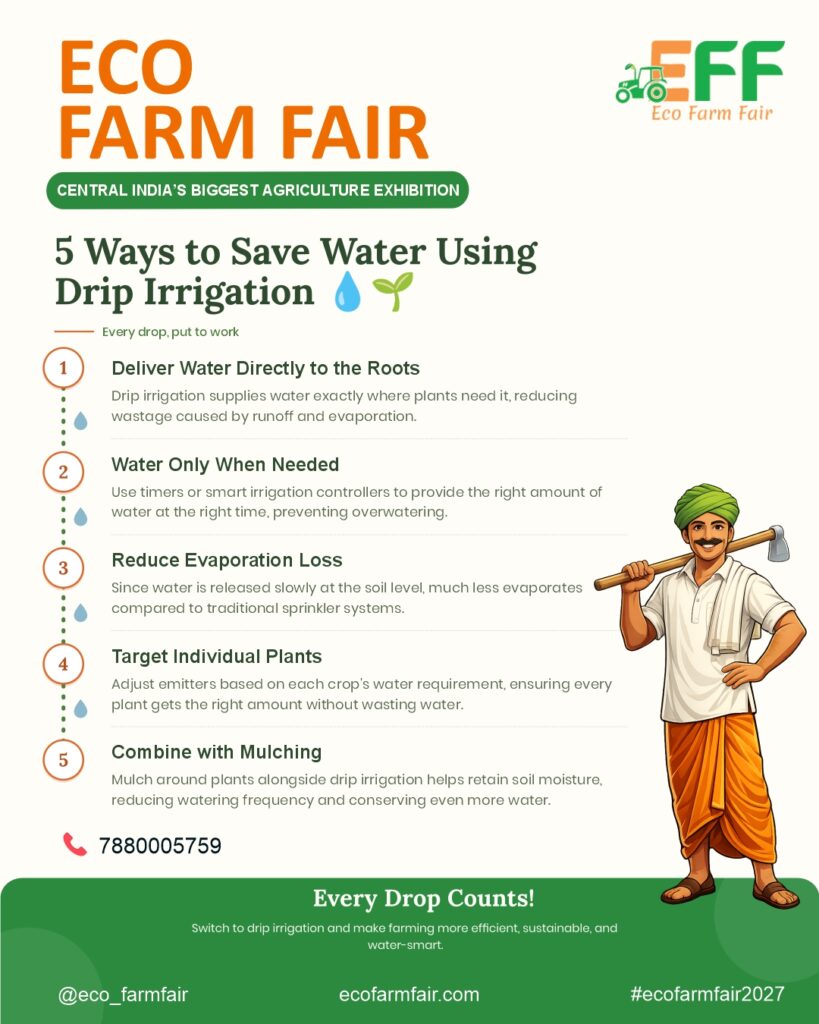
Introduction Water is one of the most valuable resources in agriculture. With changing rainfall patterns, increasing temperatures, and growing pressure on water resources, efficient water management has become essential for every farmer. Using water wisely not only improves crop production but also reduces farming costs and protects natural resources. Modern irrigation techniques and smart water management practices are helping farmers grow more with less water. Every crop requires the right amount of water at the right stage of growth. Too much water can damage roots and reduce oxygen in the soil, while too little water can affect plant development and lower yields. Proper water management helps maintain healthy crops throughout the growing season. Drip irrigation delivers water directly to the plant roots through a network of pipes and emitters. This reduces water loss due to evaporation and ensures efficient use of every drop. It is especially beneficial for vegetables, fruits, and plantation crops. Sprinkler systems distribute water evenly across the field, making them suitable for many crops and different soil types. They are particularly useful in areas where traditional flood irrigation is difficult. Collecting and storing rainwater helps farmers reduce dependence on groundwater. Farm ponds, check dams, and storage tanks provide additional water during dry periods and improve water security. Adding organic matter, crop residues, and mulch helps the soil retain moisture for a longer time. This reduces irrigation frequency and supports healthier crop growth. Modern irrigation controllers, soil moisture sensors, and weather-based irrigation systems help farmers decide exactly when and how much water to apply. These technologies improve efficiency while reducing water wastage. Choosing crops that are suitable for local rainfall and water resources helps improve productivity and reduce irrigation costs. Proper crop planning plays an important role in sustainable agriculture. Leaking pipes, blocked drippers, and damaged sprinklers reduce irrigation efficiency. Regular inspection and maintenance ensure the system performs at its best throughout the season. Many government programmes encourage farmers to adopt drip and sprinkler irrigation by offering financial assistance and technical guidance. Farmers should stay informed about available schemes through local agriculture departments. Eco Farm Fair brings together irrigation companies, agricultural experts, technology providers, and equipment manufacturers to showcase modern water management solutions. Visitors can explore smart irrigation systems, water conservation technologies, and practical techniques that help improve farm productivity while conserving valuable water resources. Conclusion Efficient water management is no longer an option—it is a necessity for modern agriculture. Farmers who adopt improved irrigation methods and water conservation practices can increase productivity, reduce costs, and build resilient farms for the future. Eco Farm Fair is committed to helping farmers discover practical solutions that support sustainable agriculture and long-term success. Join Eco Farm Fair and explore the future of water-smart farming.
Organic Farming: Why More Indian Farmers Are Choosing a Sustainable Future
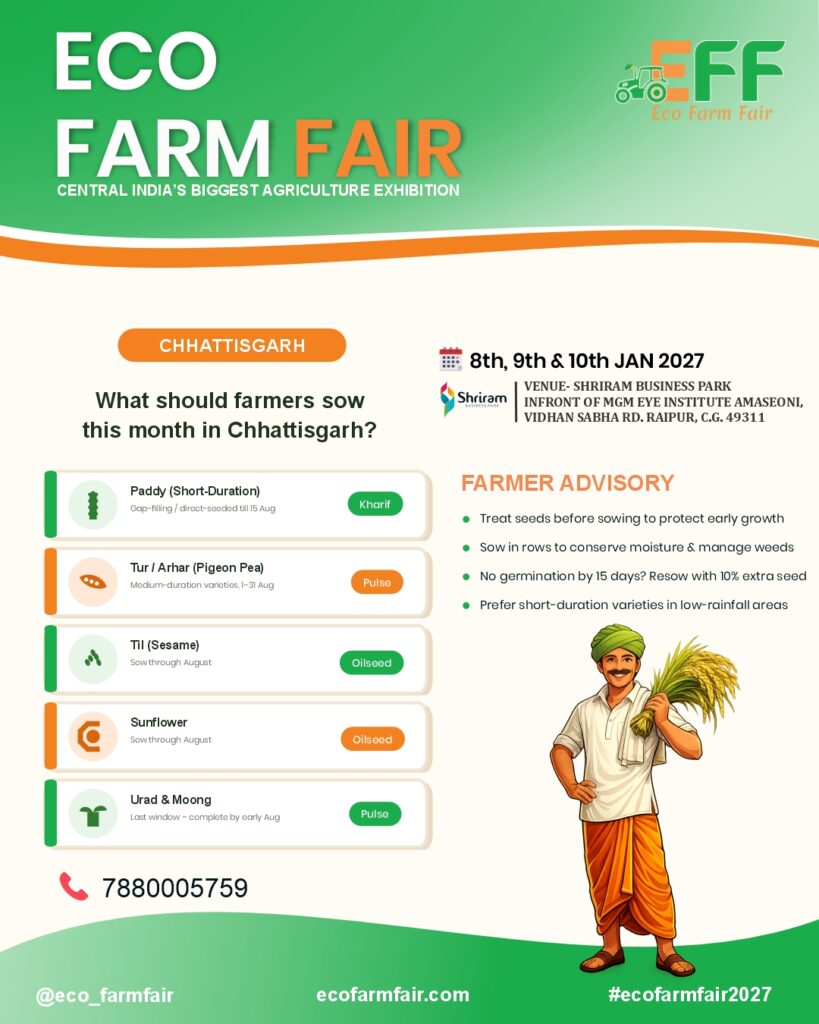
Introduction Across India, agriculture is witnessing a major shift. Farmers are increasingly adopting organic farming practices to improve soil health, reduce dependence on chemical inputs, and produce healthier food for consumers. Organic farming is not just a trend—it is a long-term approach that focuses on sustainability, biodiversity, and profitability. With growing consumer demand for chemical-free food, organic farming is creating new business opportunities for farmers across the country. Organic farming is a method of cultivation that avoids synthetic fertilizers, pesticides, and genetically modified organisms (GMOs). Instead, it relies on natural inputs such as compost, farmyard manure, bio-fertilizers, crop rotation, and biological pest control. Healthy soil is the foundation of successful farming. Organic farming increases organic matter in the soil, improves water retention, enhances microbial activity, and promotes long-term fertility. Healthy soil also produces healthier crops. Although the transition to organic farming requires planning, farmers can reduce long-term dependence on expensive chemical fertilizers and pesticides by using locally available organic resources. This helps improve profitability over time. Consumers are becoming more aware of food quality and safety. Organic fruits, vegetables, grains, and pulses are increasingly preferred because they are grown without harmful chemical residues. Growing demand creates better market opportunities for farmers. Organic farming helps reduce water pollution, improves biodiversity, protects beneficial insects, and supports sustainable use of natural resources. It contributes to a healthier environment for future generations. Organic farming practices improve soil structure and water-holding capacity, making farms more resilient during droughts and unpredictable weather conditions. This is becoming increasingly important in the face of climate change. Instead of relying entirely on chemical pesticides, organic farmers use biological control methods, neem-based products, beneficial insects, and crop rotation to manage pests naturally. Organic products often receive better prices in retail markets, supermarkets, and export markets because of increasing consumer demand. Farmers who maintain quality standards can access premium buyers. Several government departments, agricultural universities, and institutions encourage organic farming through training programmes, awareness campaigns, and technical guidance. Farmers should regularly explore available schemes and certification opportunities. Eco Farm Fair provides farmers with an opportunity to interact with experts, discover organic farming techniques, explore bio-fertilizers, understand certification processes, and connect with companies offering sustainable agricultural solutions. The exhibition serves as a knowledge platform for farmers looking to adopt environmentally responsible farming practices. Conclusion Organic farming is creating new opportunities for Indian agriculture by promoting healthier soil, safer food, environmental conservation, and long-term profitability. As farming continues to evolve, adopting sustainable practices will become increasingly important for future generations. Eco Farm Fair is committed to connecting farmers with the latest knowledge, technologies, and innovations that support sustainable and profitable agriculture. Join Eco Farm Fair and become part of the future of Indian farming
Modern Farming Technologies That Are Transforming Indian Agriculture
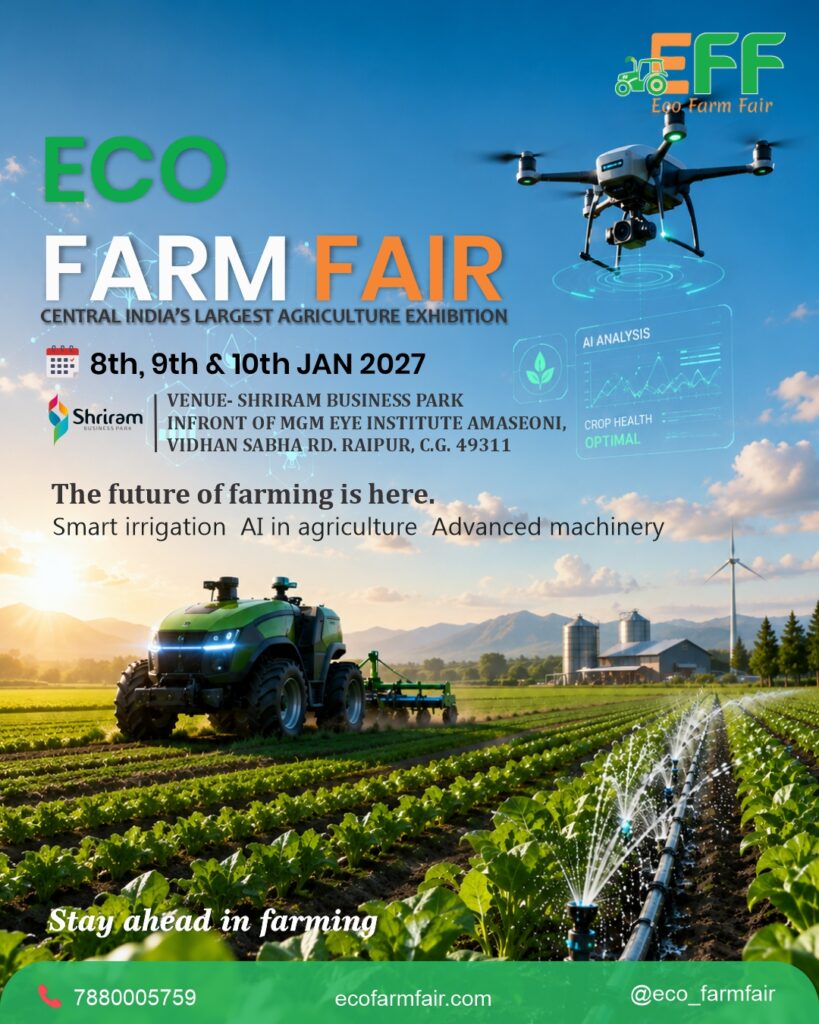
Introduction Agriculture in India is entering a new era driven by innovation, technology, and sustainability. Today’s farmers are adopting modern solutions to increase productivity, reduce costs, conserve natural resources, and improve profitability. From drones and artificial intelligence to precision irrigation and smart machinery, technology is changing the future of farming. Farmers who adopt these innovations early are better prepared to face challenges such as labour shortages, climate change, and rising production costs. Here are ten modern farming technologies that are shaping the future of Indian agriculture. Drones are helping farmers spray pesticides, monitor crop health, assess field conditions, and reduce labour requirements. They provide accurate coverage while saving time, water, and chemicals. Precision farming uses GPS, sensors, and satellite data to apply water, fertilizers, and pesticides only where they are needed. This increases crop yield while reducing unnecessary expenses. Drip irrigation, sprinkler systems, and automated irrigation controllers help farmers use water efficiently. Smart irrigation ensures crops receive the right amount of water at the right time. Healthy soil is the foundation of successful farming. Soil testing helps farmers understand nutrient levels and apply fertilizers based on actual crop requirements instead of guesswork. Modern tractors, seed drills, harvesters, planters, rotavators, and power tillers improve efficiency and reduce dependence on manual labour, making farming faster and more productive. Accurate weather information helps farmers plan sowing, irrigation, spraying, and harvesting activities while reducing the risk of crop damage. AI-powered applications help detect crop diseases, recommend fertilizers, monitor crop growth, and improve decision-making using real-time agricultural data. Farmers can now access market prices, weather updates, government schemes, expert advice, and farming techniques directly through mobile applications. Modern agriculture focuses on balancing productivity with environmental responsibility. Organic farming, natural farming, integrated pest management, and water conservation practices are becoming increasingly important. Solar-powered irrigation pumps and renewable energy solutions help farmers reduce electricity costs while supporting sustainable farming practices. Experience These Innovations at Eco Farm Fair Eco Farm Fair brings together leading agricultural machinery manufacturers, agri-tech companies, irrigation specialists, seed producers, fertilizer companies, research institutions, startups, and government organizations. Visitors can experience live demonstrations, compare technologies, interact with experts, and discover practical solutions that improve farm productivity and profitability. Conclusion The future of agriculture belongs to farmers who embrace innovation. Modern technology is making farming more efficient, sustainable, and profitable than ever before. Eco Farm Fair provides an opportunity to explore these innovations, connect with industry leaders, and prepare for the next generation of agriculture. Join Eco Farm Fair and discover how technology is transforming farming across India.
Why Every Farmer Should Visit Eco Farm Fair 2027
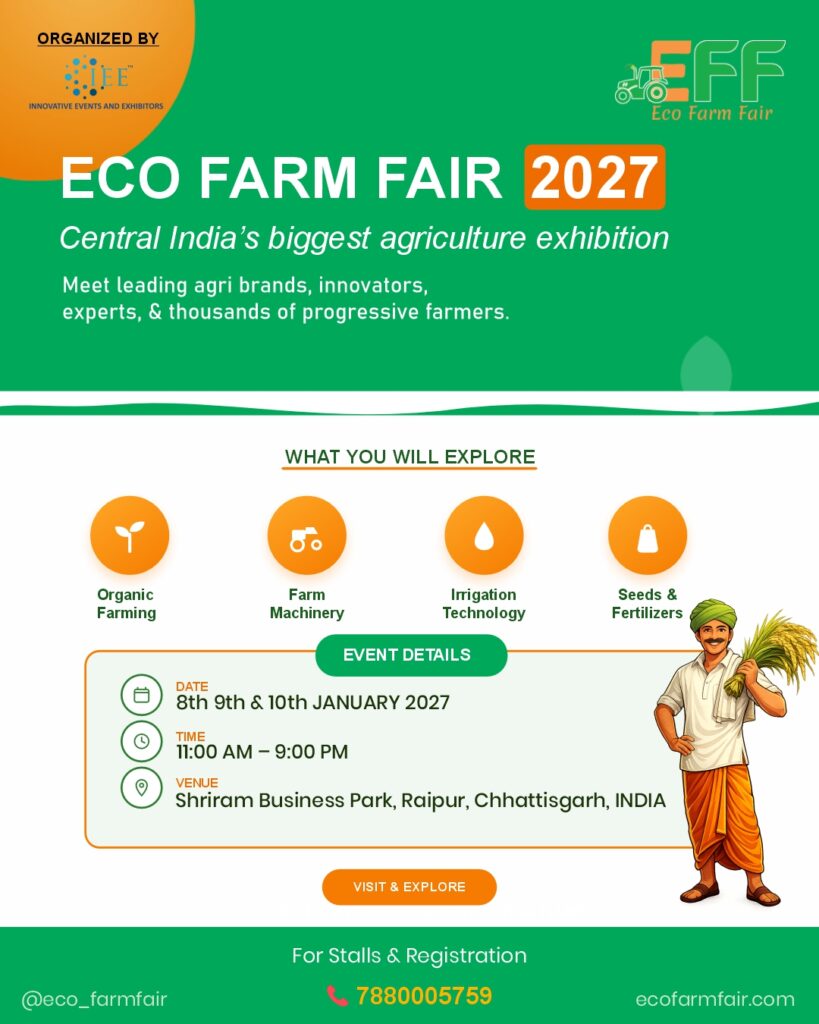
Introduction Agriculture is changing rapidly. Modern machinery, improved seeds, precision farming, smart irrigation, drones, organic farming practices, and government support schemes are transforming the way farming is done across India. For farmers, staying updated with these innovations is no longer optional—it’s essential for increasing productivity and profitability. Eco Farm Fair 2027 is designed to bring together farmers, agricultural experts, manufacturers, agri-tech companies, government organizations, startups, and financial institutions under one roof. It offers a unique opportunity to learn, compare, and connect with the future of agriculture. Visitors can explore modern tractors, harvesters, power tillers, seed drills, sprayers, irrigation systems, drones, and other advanced agricultural equipment that help improve efficiency while reducing labour costs. Technology is transforming agriculture. Farmers can explore precision farming, AI-based solutions, smart irrigation, weather monitoring systems, and digital agriculture tools that improve productivity and resource management. Eco Farm Fair provides farmers with direct access to manufacturers of seeds, fertilizers, pesticides, farm machinery, irrigation equipment, dairy solutions, and agri-inputs. Meeting experts directly helps farmers make better purchasing decisions. Government departments and agriculture institutions often participate in agricultural exhibitions to spread awareness about subsidies, financial assistance, crop insurance, solar pumps, and other schemes that benefit farmers. Experts at the exhibition share practical techniques for increasing crop yields, improving soil health, conserving water, and reducing production costs through modern farming practices. Natural farming, organic cultivation, integrated pest management, water conservation, and climate-smart agriculture are becoming increasingly important. Visitors can learn practical methods that support long-term agricultural sustainability. Farmers can interact with agricultural scientists, university experts, extension officers, successful farmers, and industry professionals to discuss challenges and discover practical solutions. The exhibition creates opportunities for farmers to connect with buyers, agri-businesses, processors, exporters, financial institutions, and technology providers, helping them expand their business networks. Instead of relying only on brochures or advertisements, farmers can compare multiple brands, evaluate product quality, ask technical questions, and make informed investment decisions. Modern agriculture requires continuous learning. Visiting agricultural exhibitions helps farmers stay informed about new technologies, market trends, and sustainable practices that will shape the future of farming. Why Visit Eco Farm Fair 2027? Eco Farm Fair is Central India’s agriculture platform where innovation meets farming. The exhibition brings together leading companies, agricultural institutions, government departments, agri-tech startups, machinery manufacturers, and thousands of progressive farmers. Whether you grow crops, manage a dairy farm, operate an agribusiness, or are exploring new technologies, Eco Farm Fair provides valuable knowledge, networking opportunities, and practical solutions for modern agriculture. Conclusion Successful farming today depends on knowledge, technology, and continuous improvement. Eco Farm Fair is more than an exhibition—it is a platform where farmers discover innovative ideas, connect with industry leaders, and prepare for a more productive future. Join Eco Farm Fair 2027 and experience the future of agriculture through innovation, education, and collaboration.